Caroline on Why she guides
In 1997, I had a nasty accident in the mountains. I fell 1,200 feet down a mountain and spent two months flat on my back in a hospital, staring at the ceiling and thinking that if only I’d had more knowledge of the mountains and how to recognize and manage hazards, I possibly wouldn’t be all broken. Although I’d enjoyed the mountains until then, a furious passion for them ensued from my fall. I knew then that I would become a guide.
Yet, becoming a guide – and a woman guide at that – isn’t an easy road. You have to want it, to live it, to have it so deeply ingrained in your blood that it becomes the essence of your life. Maybe for some it doesn’t have to be quite so extreme, but it did for me.
I didn’t know many people who could take me and teach me. So I decided to follow the motto: “If you don’t know it, teach it” and took my friend Floriane with me all over the mountains. I had no idea how to do things, and I often covered my lack of skills by blaming her for doing things wrong. She was a good sport, and with her I learned a lot through my mistakes and our successes. I climbed mountains like there was no tomorrow, going 10 to 20 days without a break, in all sorts of weather and conditions. I recorded my every climb in a diary, writing in the time it took me, with whom I had done the climb, how hard the climb was, and with ski touring, I kept track of every vertical foot I climbed each winter. It was a religion. I would drive cross-country to do a climb, not counting the time it took or money it cost. Nothing else mattered; it was as vital to me as eating and drinking. My parents were worried.
I filled out the guide course application with a shaking hand. It is scary to get close to your dreams. I wanted this so badly that I didn’t listen when I was told that I had to work on my steep skiing skills. From my accident in 1997, I experienced a great fear of falling down a steep slope. I just pushed on.
During that time, I experienced a very tragic loss and a turning point in my life. I didn’t know if I should pursue guiding. I was simultaneously doing my internship to become a lawyer and hated it. But I realized I had to pursue my passion. So instead of quitting the guide courses, I quit law, and this course became my reason to live.
Dealing with weather in the Alps

One thing I love about my job is this: it sure keeps you on your toes… both figuratively and literally, of course. But this year has been more on the figurative side of things.
Europe has been hit by a southwesterly flow of weather that even the best forecaster have had a hard time understanding and interpreting. Since guiding is very weather dependent, it has made my job quite difficult…. but all the more interesting.
Clients email me way ahead of time to book me (link to: www.intothemountains.com<https://www.intothemountains.com>) for their dream climbs or their dream week in the Alps. And it really means the world to me to do my best at making them discover my backyard, in the hope that they will love it as much I do, that they will enjoy the climbing and get to reach their dream summit. For this to happen though, three factors must be met: the client must be in good enough shape to achieve their goal, the conditions on the route must be good and the weather must be decent. Last summer, this was hardly ever an issue. Sure, there were times when I had to wreck my brains a little in order to find a better destination than the one originally planned, but it was the exception to the rule and there was always a great alternative to be found. This year however, I can’t recall many days going according to plan.
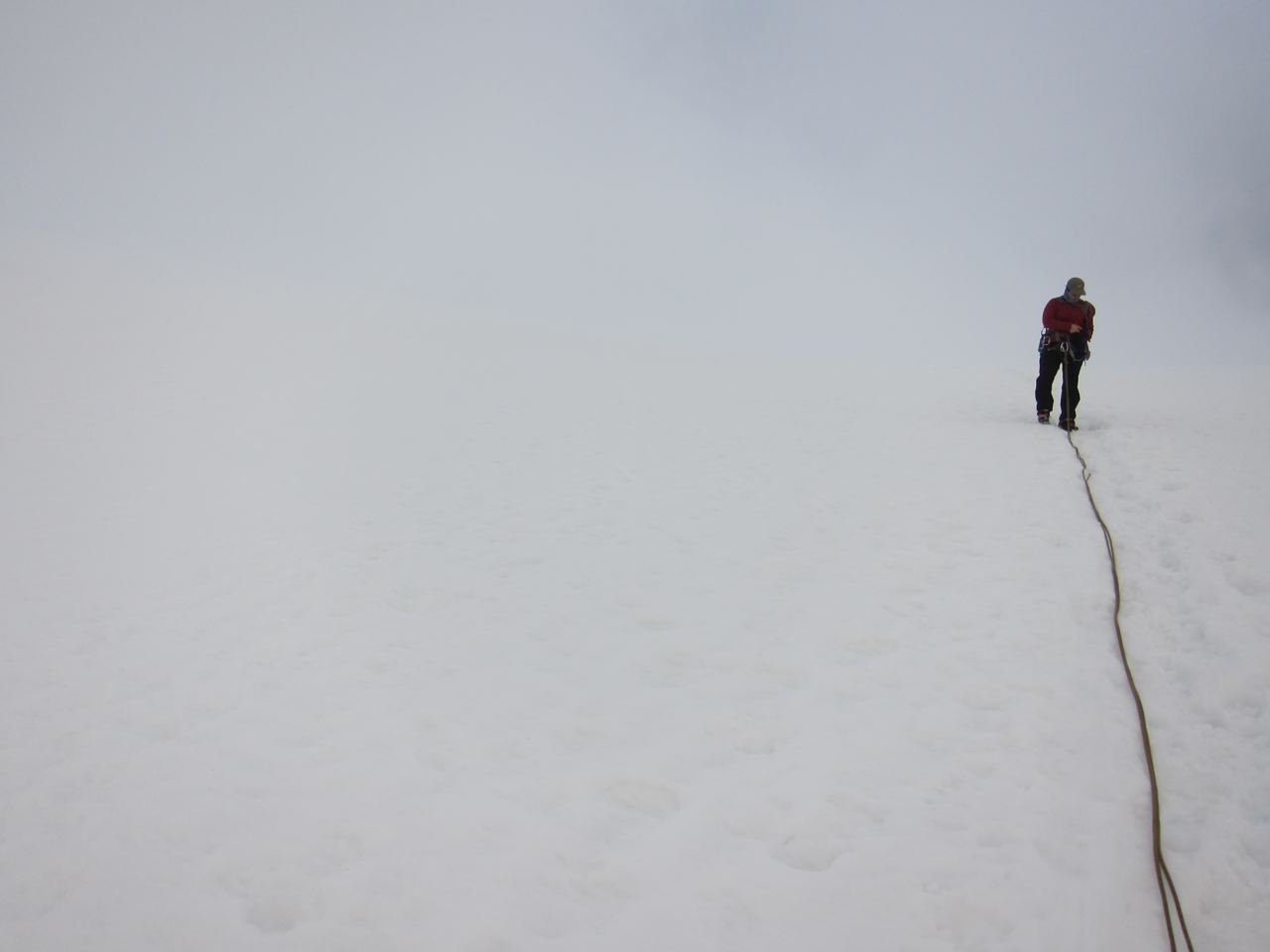
Guiding can be intense in itself, because you have to plan for the climb, figure out what the itinerary is going to be, book huts and hotels and cable cars (a perk really!), make sure conditions are good on the route, brief clients on what to expect on the climb, what gear to take, make sure they have the gear they need and that they are using it right, make sure you have the right gear to guide a climb, pack your bag, manage clients on the climb, acknowledge hazards and manage them, come home at night and repeat for the following day. But this year’s unstable weather has added a whole new level of stress.
At the end of July, I had a great client to climb both the Mitteleggi ridge on the Eiger and the Hornli ridge on theMatterhorn. I met him the day before the trip started with the weather outlook in hand and had to break the news to him that none of these climbs would happen. That’s always really hard for me to do because people have travelled from far away for this, took time off work and away from their family, all that do “Plan B” climbs. But weather and conditions are something that I can’t manage and that’s a responsibility I always have a hard time not taking on as my own. So I try to find other satisfying options, but this summer, the weather forecast would drastically change from the one posted in the morning to the one posted in the evening, forcing me to constantly change plans and adapt. This was stressful but we almost always made it work.
This past week-end however, the forecast was for three days of beautiful weather initially, and ended up into the worst three days of the summer, throughout the Alps. Even further south, where the weather was nicer, the winds reached up to 50mph at lower elevations. So, we resorted to going to the museum and eating ice cream. Sometimes, you just have to accept the reality and not try to force things. And I think clients are understanding of that but I always wish I could have done more and found where the one patch of dry weather was hiding and made it work.
As I write this, the sun is blasting through my window and I am about to head on up to a hut for the first bluebird day of guiding in a long time! This spell of bad weather makes me appreciate the sun and beauty of the mountains all the more. It will be such a nice change to be able to focus on my job and and on the clients, and not worry about the weather.
Trient
The Trient bassin is located on the eastern side of the Mont Blanc range, in Switzerland. It can be accessed from France, but is more commonly approached from Champex, a little Swiss village nestled high on the hill by a beautiful summer lake.
My client was Floriane. By now, you must all have seen numerous pictures of her and wonder who she is. I met Floriane in law school and we have been close friends since. We traveled to Nepal together and Flo was my guinea pig for most of my guiding training, before becoming my amazing client. She is willing to follow me up anything and I trust in her to do her best and persevere through rough sections on climbs. But she is not only a client, she is also a very close friend who is there for me for better or for worse. I am very lucky to have her in my life. With the weather being very iffy these days in the Alps, I’ve changed plans for our week-end about ten times. We went from plans for the Badile, to Italy, to 4000m peaks, to staying close by and explore the Trient area, where we could do something big or small depending on what the weather decided to do.
I have climbed a lot in this area. The joke used to be that we would go up there because the Trient Hut keeper was cute. Now, that he is no longer tending to that hut, the weather and beauty of the place were the next best excuse. We hiked from the top of the Champex chairlift, passed the Orny hut (nope, not horny hut!) and made our way to the base of a beautiful 900ft route called La Moquette. It’s a very moderate 900ft long route that we climbed in big boots. We reached the summit in heavy rain, but were shortly thereafter rewarded by a gorgeous rainbow. I had recommended this route to fellow FA team member Erik Leidecker and saw him at the base of the climb, and later that night at the Trient hut, where we were both staying at.
I was very successful that night thanks to my First Ascent Light Berry MicroTherm Down Shirt, which local women wanted to rip off my back and take home with them. It’s hard to keep the crowds away with such beautiful and technical products 😉
We woke up the following day to heavy rain and no visibility. Flo and I had thought of doing the classic, yet long and committing Traverse of des Aiguilles Dorees (Golden Needles) (http://www.camptocamp.org/routes/54468/fr/aiguilles-dorees-traversee-integrale-des-aretes-e-w) but the weather wasn’t anywhere close to being good enough for that. So we opted for a less committing climb, one that we could rap off of if the weather turned on us again. Flo went back to bed for two hours though, while I sat having breakfast and chatting with Erik Leidecker at the dining room table. Huts are always a great place to chat, reconnect, share experiences, etc. with other fellow guides.
We left around 8am and headed to the south side of the Aiguilles Dorees (Golden Needles), which offers some of the best orange granite in the whole range: 1300ft golden steep faces that shine in the sun and offer line after line of perfect crack and slab climbing. To get to our climb, we crossed over to the Fenetre de Saleinaz then the Fenetre Suzanne to reach the base of the “Promontoire de l’Aiguille Sans Nom” (read a sub-peak of the Nameless Tower). We geared up at the base of the climb, transitioning from boots and crampons to rock shoes while still standing on the glacier and headed up our climb. The climb is called Tajabone and is a 300m long climb which ranges from 5.9 to 5,10b. It’s the most beautiful climb of this grade I have ever done. Each pitch surprised me by its beauty. The second pitch looked like a totally blank wall and I wondered how it could be rated only 5.9, but all the holds were incut, making them invisible from below, but perfect hand holds. The only draw back on the climb was how overly bolted it was. One of the pitch climbed up a perfect hand crack that was fully bolted, something you would never seen in the US. At the end of the climb, we rapped down the route and headed down the Saleinaz glacier to stay at the Saleinaz hut. That hut doesn’t give access to much interesting climbing, so we had it to ourself.
When I returned home, I looked up “Tajabone” to find out the meaning of this word I had never heard before. Tajabone is the muslim equivalent to our Halloween. Along with the definition, I found this beautiful song by Senegal singer Ismael Lo: http://www.youtube.com/watch?v=YUWyUE6kqoU. Goes to show, you can find all sorts of beautiful surprises by going into the mountains!
[nggallery id=15]
Aiguille du Moine
When you stand at the top station of the Montenvers train in Chamonix, France, you see two peaks standing out to the east: The Drus and the Aiguille du Moine, a little further south. The aiguille du Moine is a little smaller at 3412m and a little less steep than it’s neighbour but offers just as good a quality of rock in a setting that is very spectacular. The Aiguille du Moine is surrounded by famous peaks like the Grandes Jorasses, the Verte, the Drus, etc., located in the center of cirque called the “Talefre Bassin”. It is quite remote and therefore doesn’t get too busy.
Because it’s not too high in elevation and south facing, the south ridge of the Moine (read Monk) is quickly in condition. After a very wet month of June in the Alps, this seemed like a great option. Also, after celebrating a wedding until 3.30am the previous night (well, that morning), I was happy to “only” have to hike to the hut on the first day. I met Silke and Floriane at the Montenvers train and we rode the train to the top. The hike starts from the train station and climbs up the world famous “Mer de Glace” (read sea of ice), to some crappy moraine, up very steep ladders and then onward to the hut up a beautiful trail bordered by falshy pink rhododendrons. We arrived at the hut after 4 hours of hiking and quickly downed a nice slice of pie to recover from the effort.
I had done this climb twice before and hadn’t been back to this area. It’s funny how you forget approaches – how long they are -, the route itinerary, the gear you need to take, etc. It makes it even more of a pleasure to return to places, because it often feels like it’s the first time. We woke up at 4am and headed up to the base of the climb. I was shocked to how small the pocket glacier has become. That was quite a striking difference from when I was there last. That, I remembered!
We climbed up the steep snowfield to the center of the south face of the Aiguille du Moine, where both the normal route and the classic south ridge start from. We left our crampons and ice axes there and headed up the very wet – almost riverlike – ledge system that climbs up the left hand side of the face to the south ridge proper. We were greeted by the sun, but only briefly as most of the route climbs up the the westerly side of the ridge. The climbing is up perfect granite and steep wide cracks, which are often polished from traffic. Yet today, we were all alone on the route, which added to the experience. The difficulties aren’t too sustained, but there are a few sections of 5.9 that we climbed in big boots. We enjoyed the summit to ourselves with Mont Blanc in the background, no wind and beautiful sunshine and blue skies.
But the climb isn’t over until you are at the hut. The descent route is quite tricky to find. There is lots of route finding and zigzagging through the maze of the south face. It was 2pm when we reached the bottom of the face and our last train was a 5.30pm. There was no way I was going to miss it, so I told the girls that we had to make a run for it. We quickly had a snack and some water and ran back down to the hut, repacked the bags and kept running down the trail, down the ladders, down the moraine, down the glacier, where we saw lots of people. I thought to myself: “what are these people doing? they should be running down to the train too?”, but I didn’t want to stop and ask, so we just kept going, until we reached the bottom of the ladders that take you up to the train. There, Silke and Floriane told me that they wanted to take a break. It was only 4.20pm and we had plenty of time ahead of us. Relieved, we took our time and slowly climbed back up to the ladders to the train, which took us down to Chamonix, saving us another 2hour descent!
[nggallery id=14]
Presles
Nestled in the heart of France is the great Vercors range, a beautiful red and grey limestone high plateau whose smooth rhythm is interspersed with steep to overhanging cliffs, sometimes reaching 500m in height.
I had visited this place only once on my way to the Verdon – another world class climber’s destination – further south of France and swore then that I would be back for more, but I also wondered why I hadn’t been there before; Presles is only 3 hours away from my home in Chamonix and I had heard so much about it through my parents who had climbed there a lot back in the ’70s. In fact, they had met there when my mom worked on a farm and owned a cow with a friend. My dad had suffered a climbing injury and went there to rest and swooped my mom off her feet. He took her climbing on the beautiful cliffs of Presles and she was instantly sold, both on climbing and on my Dad.
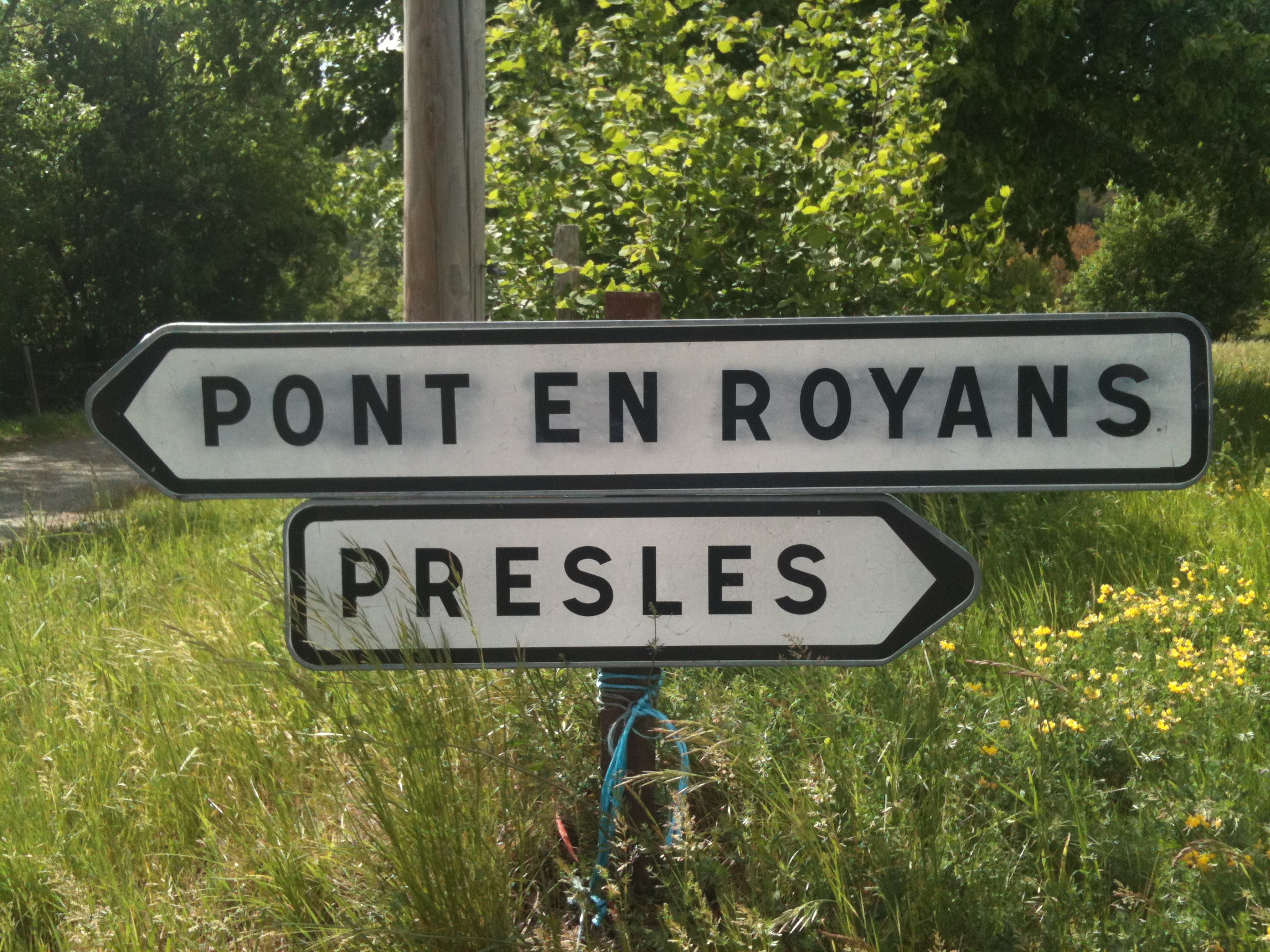
With beautiful yet cool weather in Presles mid-may, I headed down there with Geoff Unger, a fellow guide who also lives in Chamonix. We started the trip with a lovely meal with my friend Philippe Brass and his wife Claire in the little town of Pont En Royan, where house hang high above the river. I wanted to thank him for all the beta he had given me for our trip to Jordan back in February. Philippe is also a guide and the author of the guidebook for Presles. We were in luck since every night we were able to tell him what type of route we were looking for and he gave us a selection of the best routes matching our criteria.
We spent three days there climbing some amazingly steep and features limestone, offering anything from cracks to “goutte d’eau” (read water drops, which are tiny tip size holes formed by water dropplets), to slabs to overhangs, etc. We climbed two sport multipitch routes: Doigts de Passion (5.11d) and TopoManiak (5.11a) and a trad climb: Les Cons qui s’adorent (5.12a).
At the end of the three days, our skin was raw, our feet hurt so badly that it was painful to even stand on footholds and it was time for us to head back to Chamonix, where work was awaiting both of us. As always on trips, I was grateful for the simplicity of our lifestyle during this little climbing holiday: waking up, deciding on a route, having breakfast, getting to the climb, climbing a beautiful and memorable route, going back to our friends for delicious home cooked meals and great conversations around a nice bottle of wine… Ah, the life!
See pictures here:
http://www.facebook.com/media/set/?set=a.10150188453193028.331416.802888027
and
http://blog.firstascent.com/2011/06/13/caroline-george-climbs-at-presles-in-france/
Haute Route
The Haute Route is the ultra classic high mountain traverse linking Chamonix to Zermatt, sleeping in huts at night and only going back to the valley flooronce, to connect Champex to Verbier. The traverse takes 5-6 days. It can be done many different ways, but the most travelled itinerary goes like this:
Grands Montets (Chamonix) – Trient Hut – Verbier – Prafleuri Hut – Dix Hut – Pigne d’Arolla – Vignettes Hut – Zermatt.
The Haute Route was first done by Chamonix guides in 1903, traversing up and over the Col du Sonadon, which is a little more difficult than the Verbier option, which was in turn done in 1919 by Marchel Kurz. The Haute Route covers over 100km and climbs 6000m in elevation. Some people have done it under 24hours, which is an incredible feat. It is impressive to imagine that over a century ago, people found a way through the mountains’ weakness – passes and valleys, sometimes having to climb a peak such as the Pigne d’Arolla -, which connected Chamonix to Zermatt.
The ideal time to do the Haute Route runs mid March through early May. This year, snow conditions have been quite bad because of the lack of snow and warm temperatures over the Alps. Yet, early April still offered enough snow that we didn’t have to carry skis much at all. We left from the Grands Montets cable car on a very busy Saturday morning, skied down to the Glacier d’Argentiere below and started up to the Col du Chardonnet, the first pass of the Haute Route. Yet, at the pass, one of the clients hurt his calf and we had to turn around, skiing back to Chamonix in difficult snow conditions.
The following day, we took a taxi to Verbier and enjoyed a nice breakfast at the “Off Shore”, one of the local mainstream restaurants by the lift. I thought that we wouldn’t leave until 9am, giving the people arriving from the Trient hut enough time to get to Verbier. I was hoping to share the lead with some other guides because both the visiblity and the weather were really bad. We took the lift to the “Col des Gentianes”. Skiing down the piste, we had to ski pole to pole to remain on the piste because the visibility was at the most 5m out. When we got to the flats at the base of the Col de la Chaux – our next pass -, we put our skins and headed up to the pass. Old tracks had mostly been covered so it may for interesting route finding, almost all the way to our destination: the Cabane de Prafleuri, which is nestled on the one end of the Lac des Dix. Much to my dismay, no other parties or guides were on route that day. When we arrived at the hut, the hut keeper told us that out of the 80 reservations she had, only 17 people showed up. The parties that were already there had started from the Mont Fort Hut, on the Verbier pistes.
It was actually really nice to have so few people along. It made the experience much more relaxing and enabled us to have more a “wilderness experience”. It froze overnight, and we were able to cross over to the Dix Hut, without going back down to the valley, as a lot of parties had had to do because the snowpack was too soft. We had an interesting traverse, offering a mix of avalanche debris, grass skiing and lots of poling to get to the base of the Pas du Chat, the infamous steep section leading to the Dix valley. We arrived at the hut in time for the delicious Rosti, specialty of the Dix Hut.
The fourth day, we skied up and over to the Pigne D’Arolla via the Serpentine. Since the Vignettes Hut was closed, we added a little leg to the day and toured up to the Col de l’Eveque, skied down to the Col Collon and ended up in Italy at the Nacamuli hut. Although Italy is amazing and the food is orgasmic (let’s not be afraid of words here ;-)), they are architects of toilets. The toilet is outside, way down some steep metal staircase in a rectangular box, whose door doesn’t close, and to top it off, you stand on a see-through grid which offers a view on a pyramid of… well… you know.
That being said, the hut was lovely… less lovely was getting out of there and back on the main Haute Route the next morning, touring up some SW facing refrozen steepness. I worked the trail so hard with my my ice axe that my arm hurt and with my ski crampons that I managed to break one of them. Our itinerary for the day was Col Collon-Col du Mont Burle-Col de Valpelline, which offers the most stunning view on the Matterhorn. A real treat. We skied on down to the Schoenbiel hut, as the clients didn’t want to stay in Zermatt that night.
With one more day on the schedule, we skied down to Furi (the mid station in Zermatt) and took the cable car up to the Klein Matterhorn and finished the trip with an ascent of the Breithorn, the most accessible 4000m peak around. We enjoyed a nice and very long ski down to Zermatt with a stop in Furi for some beers and Croute au Fromage… or was it Rosti again?
Thanks to James, Steven, Dan and Adam (not my Adam) for an unforgettable Haute Route!
[nggallery id=5]
View more pictures here
Eiger: one day ascent
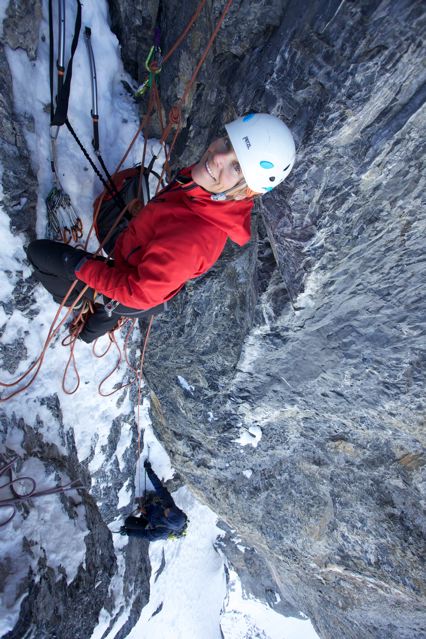
I first climbed the north face in 2003 with friends from Chamonix. The idea had sprung when I crossed ice axes with a friend on a classic Chamonix ice gully and I mentioned that conditions on the Eiger must be stunning. We had just had a spell of 6 weeks of blue bird weather and I knew that the climb had seen lots of traffic. The next day, we were driving there to climb the mighty north face.
In my family, the north face of the Eiger could almost be condsidered an heirloom. My dad had always talked about it and wanted to climb it but deemed that having kids and climbing the Eiger weren’t compatible. I therefore felt that I should climb it before I had kids. I climb so much because I always have this perspective in sight. Although, realistically, I don’t think this would change much for me. But it’s good excuse.
The whole drive there though, I thought that I would say that I was going to bail right once we got to the parking lot, then on the train, then at the hotel at the base of the Eiger (the Eigergletscher Hotel), then at the base of the climb… but suddenly, I have 400m up the face and there was no turning back. I was overwhelmed in some way and the whole climb felt unreal. But it was a landmark in my career as alpinist.
Last Fall, Adam was looking for a partner to climb the north face of the Eiger. I had already done it and had no desire to ever get back on the face. But he really couldn’t find anyone motivated, so I said I would go. At the last minute though, Tim Connelly motivated to go and I then realized that I had really wanted to get back on it, especially with my husband. The whole next day that Adam was on the route, I so regretted not sharing that experience with him. View his video here. So I went and climb the north face of the Drus instead, one of the most beautiful alpine route I have never done.
Yet, the Eiger loomed in the back my mind. I suddenly had the desire to climb it in a day. I figured I would train all winter for it, but training really isn’t something I ever do. I climb all the time, go ski touring a lot, but I never had the perspective of training for an objective. I don’t really know how to I guess. Plus, I traveled so much this winter that there was never any time for specific training. I thought about the Eiger on and off but it was no longer a big goal of mine. I climbed routes like the Supercouloir, Pinocchio on the Tacul, etc. Yet, a week before going on the climb, I tried to do a route on the north face of the Droites with my friend Tania. It had just snowed and the accumulation at the base worried me. We were sinking in to our waste and making slow progess so we pulled the plug and decided to go ski touring instead. In a day, we toured to the base of the Droites from the Argentiere glacier, skied to the Col d’Argentiere and then to the Col du Tour Noir, making for around 2500m elevation gain. It isn’t that much, but I thought that if I could do that easily, then I was fit enough to climb 1800m on the Eiger. I felt good. With a window of great weather ahead and Adam and I looking for an objective for the week, we decided to give the “Eiger in a day” a go. Upon arriving there, we heard the record had been broken down to 2h30! so there was no longer any excuse for us not to be able to do it in a day. With that in mind, we headed for the north face, with no bivy gear or stoves, committing to being back down by dusk.
The climb went really smoothly, with a perfect track the whole way. The climbing felt a lot easier than the first time I did. I never felt tired or wishing the climb would be over already!!, a feeling I often get on long routes. We both knew the routes and I felt that knowing what was ahead was made it less stressful. What was stressful however was having the helicopter a 100m away from us for most of the day, dropping off the new record holder, Dani Arnold, on sections of the face, just to take footage of him. Definitely ruined the wilderness experience for us.
We topped on on the Mitteleggi in the afternoon. And then came the crux: the knifeedge ridge that leads to the top. Quite unnerving. We hung out on the summit for a quite a while, enjoying the fact that we had just shared one of the best climbs of our lives together. Eventually, we descended the west face back to the Eigergletscher, where comfortable Swiss beds awaited us.
View the gallery on my facebook page by clicking here.
Supercouloir
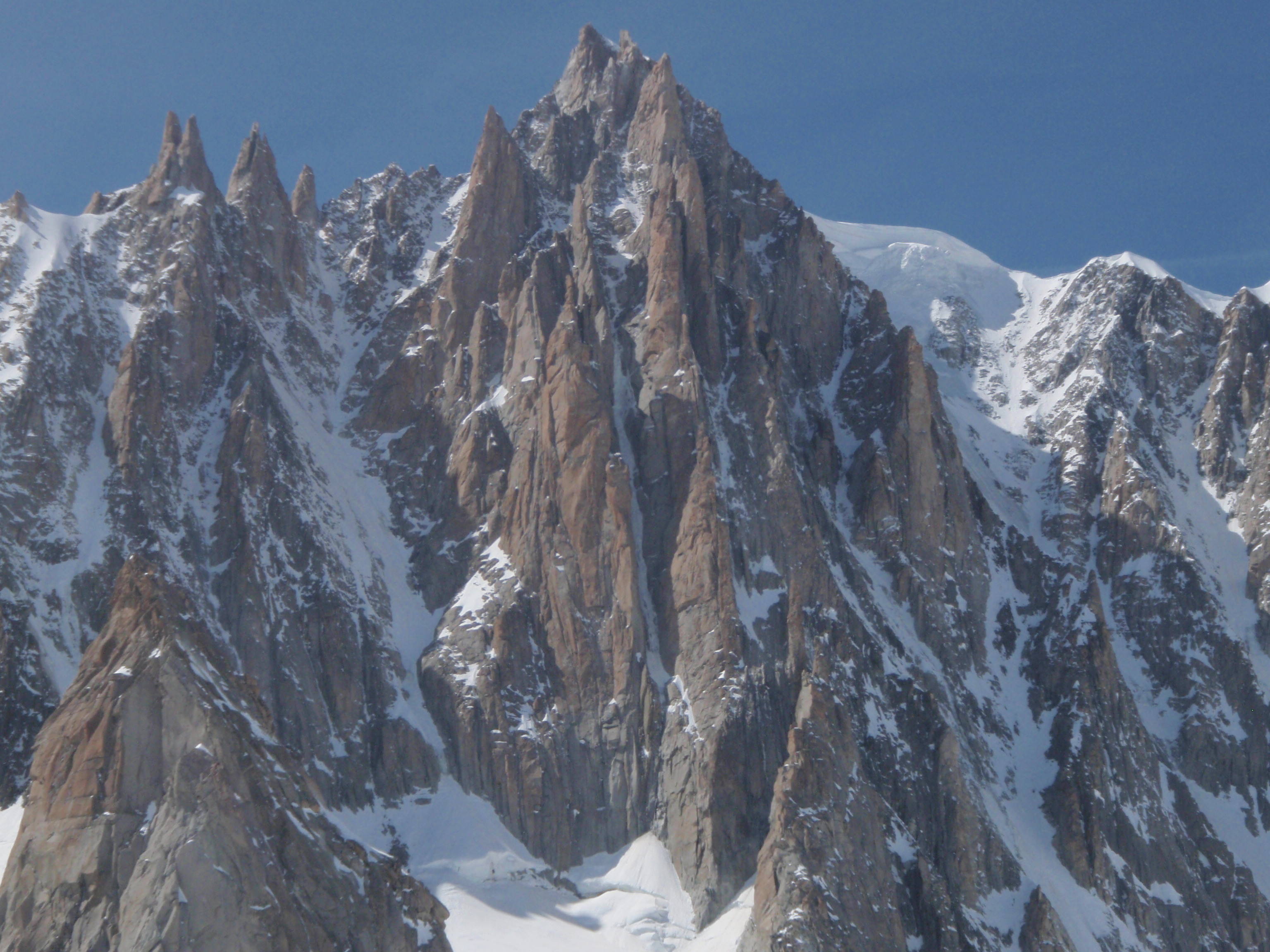
With a month spent rock climbing in the middle of winter (Thailand/Jordan), I feel like winter has eluded me. So, despite summer like temperatures in Chamonix this past week, I was excited to swing my tools a little more into some sweet alpine ice.
A week earlier, my partner Tania and I had tried to climb the Supercouloir but it had just snowed and huge snow mushrooms were looming high above us, making the route impossible to climb. We resorted to climbing the nearby “Goulotte Lafaille”, a 400m long ice route on the Mont Blanc du Tacul (4248m). We made quick work of it, simul-climbing most of the route. The next day, I left on a Haute Route, guiding 4 amazing British lads from Chamonix to Zermatt. Upon returning, the weather proved to be – yet again – beautiful and we decided to get back on the Supercouloir.
The Supercouloir was first climbed in 1975 (before I was born!). This rock/ice line is the most striking feature on the east face of Mont Blanc du Tacul. It is nestled between two beautiful pillars, one of which is the worldclass Gervasutti pillar. I had climbed this route in 2003, via the direct start, which is no longer in condition at this time of year. It was my partner’s dream to climb this route and I was excited to do it with her. Tania is full time doctor and was on the guide course with me in Switzerland. We have climbed extensively together in the past, but since my departure to the States, we were lucky if got to do one outing a year together. Recently though, we have made up for lost time.
We slept at the Cosmiques Hut – a beautiful refuge only 15minutes away from the top of the Aiguille du Midi cable car. We reached the base of the route by dawn. The sun hadn’t touched the rock yet and it was very cold to touch and was still covered in ice in places. I had to resort to using an ice axe to make it up the iced up slab/super thin crack. I led two pitches in one and reached the now bolted anchor, greeted by the sunshine. We climbed in rock slippers, hauling a pack loaded with our ice climbing gear: crampons, ice axes, boots, ice screws, jackets, gloves, etc.). We made quick work of the remaining 3 pitches taking us to the bottom of a left slanting snow ramp, which took us to the ice. We switched to our ice climbing gear, left the rock gear and climbing slippers at the anchor and made our way to the ice. We climbed the 300m long ice climb in two pitches, simul-climbing 3-4 pitches at a time. By noon, we started rapping down the route, excited to get back to the sun. Although temperatures were nearing 80F in the valley, a cold breeze running down the climb made it feel like we were in an icebox.
We skied down the classic Vallee Blanche in order to catch the Montenvers train. This is the first time that I had to carry my skis to reach the train. Because of the incredible heat in Chamonix right now, we have lost 10cm of snow per day and the mountains look like it’s mid-June! But ice conditions up high are still good and am excited to have a late warm winter season, making ice climbing just a little more pleasant.
[nggallery id=3]
Jordan
I had been to Jordan when I was a little girl, 11years old to be precise and had always wanted to go back. My parents had taken us there over Christmas. It was my first time in such a remote country, amongst new people, a new culture, and I loved every minute of it. My Dad was written a thesis on the “Seven Pillars of Wisdom” by TE Lawrence, and this trip was both a pilgrimage and an excuse to do first ascents on the majestic sandstone big walls that define Wadi Rum – a desert 4 hours south of Amman.
I love doing first ascents. They don’t have to be big or worldclass, I just love the feeling of setting foot where no one else has set foot before. Since I was there in 1987, lots of climbers had visited Wadi Rum and put up new routes. So, I didn’t know if we would find anything new to climb. But thanks to our local contact, Attayak, we found a line. It was far away and hidden in a dark corner but it was unclimbed and that was all that mattered.
Upon returning from Antarctica, I flew to Thailand to meet up with Adam and two friends of ours, Sarah Garlick and Jim Surette. Sarah was my partner for the trip, Jim the cameraman, and Adam the rigger for Jim. We went to Thailand first to train and be in shape for adventure climbing in Jordan. After a week there, we shifted from exotic-palm tree-beaches-thai food and thai massage to a different type of exotism in the middle east. Until the last minute, we weren’t sure we would go to Jordan because of the uprisings going on all over the Middel East. But local contacts swore that nothing was really going on, and indeed, we never witnessed anything.
Upon arriving in Jordan, I reconnected with my childhood memories. It was amazing to experience this feeling of going back in time, thinking that I had been there 24 years prior, yet everything seemed the same. The adults were probably the kids I had played with during my first visit, houses had been built, but overall, nothing seemed to have changed.
We climbed around Wadi Rum, getting our bearings and learning to feel somewhat comfortable on the loose rock – the rock there is sandstone and what makes sandstone solid is its the cement/matrix, but there is non there, so anytime you drop a rock, it instantly turns to sand. With only two weeks in Wadi Rum, we soon decided to check out that potential line Attayak had told us about, since this was the goal of our trip.
Sarah and I checked it out one day, climbing a little ways up it, to make sure it would go. We felt confident and excited about it, so after a rest day, we returned, all geared up to get to the top. The rock was unpredictable and quite loose, which made for real adventure climbing in a remote place. We topped out by sundown and made our way back to our packs by rapping in the dark to the anchors that Adam had bolted on the way up. We named the route “Uprising” in view of the events going on in the Middle East in February 2011.
We enjoyed more climbing and visited Petra for the remainder of our stay.
I loved every moment of this trip, the adventure, the memories of my youth, sharing these times with great friends and with Adam. I am already looking forward to another adventure, rock climbing where no one has been before.
Read more and view the video here
Antarctica
How do you go to a place you can’t even pronounce, let alone spell right, each time you try and explain where you are going. That extra “c”, right in the middle, always eludes me.
Going to Antar”c”tica is a little like going to the moon. It’s one of those few places on the planet that is really hard – and expensive – to go to and where you would not survive without some support system. The continent is immersed in full darkness 3/4 of the year and the it is bitter cold there without the sun. Very few people live there year round, and only in established bases.
When I first landed there, I thought to myself:” wow, I could just fly home now and be satisfied”, for the scenery was so breathlessly mindblowing, with infinite stretches of ice, only broken by sheer knifeedges ridges and summits.
I had feared the cold I would experience in Antarctica, and because of – or thanks to –
that, I didn’t feel that it was as cold as I expected it to be. Anytime we were in the sun, it was comfortable, it’s only when the sun hid behind the mountains that the air felt bitter cold.
The scale of mountains there were immense. Anywhere you look are unclimbed mountains, pristine glaciers and wilderness. What lacked maybe was the wildlife. Non of that inland there.
We summitted Vinson, the highest peak in Antarctica, which is what we had come to do. It was a beautiful day with winds strong enough to make it feel like it was -60C. But we had great warm coats that made it feel as though we were in the Bahamas… well, sort of.
We then flew back to Union Glacier, where we got stranded for a little while, while a strike was going on in Punta Arenas. The governement decided to stop subsidising gas in Chile and truckers went on strike, blocking access to Punta Arenas. In the meantime, I did a whole bunch of first ascents around Union Glacier Camp. The camp is a new location this year and so all that is around is unclimbed terrain. It was a blast. I love the feeling of being the first Human to set foot anywhere!
Read more on the First Ascent blog!
View Gallery on my facebook page: http://www.facebook.com/album.php?aid=277169&id=802888027
Bozeman Ice Festival
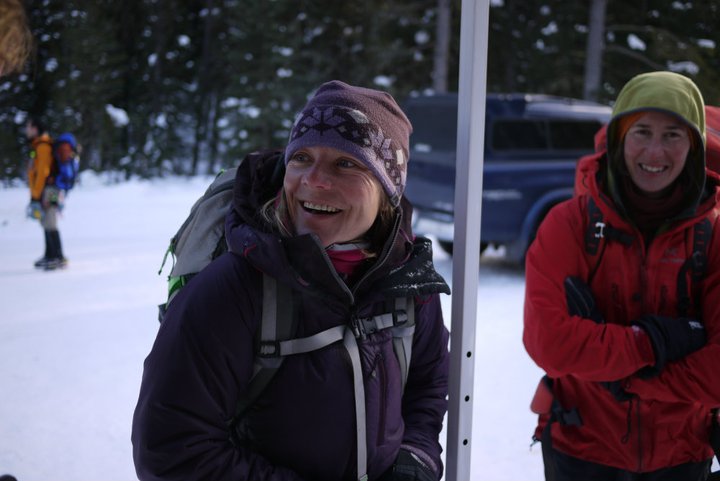
For the past three years, the Bozeman Ice Festival has marked the beginning of my winter season. I say goodbye to warm sun and rock, climbing slippers and tank tops and trade it all in for big boots, crampons, axes and of course, snow and ice. My husband, Adam, and I arrived a little early to to reconnect with the feeling of standing on front points and swing tools into frozen waterfalls. Although the idea of standing in the cold all day is never that appealing at the start of the season, the magic of reconnecting with the ice instantaneously makes me forget about the pain of screaming barfies and a shivering body. This year though, the transition wasn’t as brutal as previous years when I would partake in the Icebreaker – a competition where we would run at least as much as we would ice climb, trying to hit three areas in the canyon, having lots of fun in the process, crossing paths with fellow competitors and trying to earn the most points by the end of the day.
The Icebreaker competition was cancelled because of a fatality that occurred in the canyon during the Icebreaker last year, when world renown ice climber Guy Lacelle was taken by a small avalanche and fell 500ft to his death. This was such a big loss for the community: we was not only an amazing climber, but one of a few people who really stuck to their life values. This event really scarred me because it was then that for the first time I came across a dead body in the mountains and with that, I wasn’t sure that I would return to the event. I didn’t really care to revisit the canyon, relive those moments, and was afraid of how it would affect me. But I am glad I came back.
The athletes gathered wednesday night at the Northern Lights Store to talk about the event, talk about what each had done throughout the year, how conditions were in the canyon, etc. It was so nice to see many familiar and friendly faces. I am always comforted by the sense of belonging to this amazing community of people who live for this mutual passion. Joe Josephson – the organizer – was as enthusiastic as ever, making us all feel welcome. JoJo has traveled the world in search of new ice climbs his whole life, wrote guidebooks to the Canadian Rockies and to Montana, and his unconditional love for this activity combined with his permanent smile are contagious.
The official start to the event was Thursday. Local climber taught clinics while I went climbing with Adam above Genesis 2, an area located straight above the parking lot. We had heard of a new bolted route being put up, so we headed that way. As often during busy events, the route was taken so we decided to explore a little and Adam found a fun looking line: it started up a chossy crack of bad conglomerate, reached a smear of ice, continued further up the crack to 40 ft of vertical and very brittle ice. Finding a First Ascent in such a well travelled area always feels like you found that precious hidden gem. Climbing it involved eating a lot of dirt and breaking a lot of ice but it was steep enough that we were pretty pumped from climbing it. A perfect mix. We then went back down to the line that was previously busy and got to climb it in the warmth of the late afternoon sun. We ended the day with a nice warm meal in town to refuel for the following day’s clinics.
The Bozeman Ice Festival is the only event to host a full day of all women’s clinics, taught by women guides. I was working with Mattie Sheafor from Jackson Hole whom I’d worked with at Chicks with Picks this year. We arrived early in the morning to a parking lot full of very motivated and excited women, standing in the falling snow with their packs on and ready to go before we had even left the warmth of our car. This surge of energy is better than any double shot of coffee in the morning. Our clinic was introduction to leading and multipitch efficiency on ice. To make sure that everyone’s expectations are meant, I always ask what those are. Mostly, our ladies wanted to be more self reliant, more efficient on ice, be able to place screws and take them out properly and build anchors. So that’s what we worked on all day. While some were climbing and working on their “triangle” – aka, swinging one tool up and two feet below in line with the ice axe to form a triangle, which is the most efficient way to climb ice -, others were learning how to place a screw, build an anchor, make V-threads and multipitch efficiency. Despite strong winds blowing the snow in all direction, the psych was high and time flew by. I get so much out of days like these: seeing people learn, improve and wanting to get the most out of the day makes my job so rewarding. We wrapped up the day with a hot mint liquored coco at the parking lot and huge platter of cheese. Yum! The little details, the little treats is what makes this event so special.
Clinics went on through the rest of the week-end. With a busy schedule ahead, I wanted to take advantage of my time in Hyalite canyon to climb for myself and to spend some time with friends that I don’t get to see very often. Audrey Gariepy is one of them. She lives in Quebec and travels the world climbing and plants trees in the summer. Our paths only cross at ice climbing events it seems. We did a trip together to Canadian Rockies’s Icefall Brooke a few years back and I hope we will get to do another trip someday. She is one of those happy people that I really enjoy spending time with. On saturday, we hiked deep into Hyalite Canyon to climb Cleopatra’s Needle, a WI5/120m route which was in easier condition this year. The 1.5hour hike in went by fast because we chatted so much. Luckily, no one was on the climb when we arrived so we had it all to ourselves. Great climbing! As we rappelled another party was starting up. We thought we would climb some more, somewhere else, but instead we decided to watch these guy try to climb a nearby route called Airborn Ranger – a long pilar which was barely touching down. The guy made two moves and went airborn on Airborn Ranger! Ouch!
The following day was really warm. Majka Burhardt, Pete Doucette and I tried to go ice climbing, but traveling on snow had become heinous so we bailed and went jeans shopping instead! Love it!
Each night, we regrouped at the Emerson Center to watch slideshows by Will Gadd, Emily Stifler, Jason Thompson, Jim Shimberg and a beautiful heartfelt movie by Chris Alstrin who did an amazing job capturing who Guy Lacelle really was. It was inspiring to watch and so humbling to revisit with this amazing man. It felt like coming full circle with last year’s event. He is gone, but thanks to this beautiful tribute, he is immortalized in all of our hearts.
The 15th edition of the Bozeman Ice Festival was the best I have attended yet. The atmosphere was a lot more relaxed without the competition and we were all there to share in a passion and remember a man who’d inspired us all in one way or another. I left with a smile on my face and full of gratitude to reconnect with friends and meet new ones from all horizons. Thanks to all the people who made it happen. Will be back!
View photos here: http://www.facebook.com/pages/Bozeman-Ice-Climbing-Festival/182780536740#!/pages/Bozeman-Ice-Climbing-Festival/182780536740?v=photos
Thanks to First Ascent and Petzl for sending me there!
Frendo Spur
Frendo Spur… check it out! http://blog.firstascent.com/2010/10/22/first-ascent-guide-caroline-george-navigates-the-frendo-spur-in-france/